
Shreveport, Lousiana Police Shooting of
Marquise Hudspeth
The decedent led police on a five-mile chase after failing to stop for a moving violation.
After stopping at a Circle K market, the decedent attempted to flee on foot and was shot by two officers who stated that they believed he had a gun in his hand - it was not a gun but a metallic chrome colored cell phone.
I am not involved in any official investigation but I was asked about the incident and I reviewed the three police car video tapes segments publicly available.
Central Issues
Could the officers could have reasonably believed the suspect was armed with a gun?
Was the suspect simply trying to flee or did he intentionally act as if he were armed?
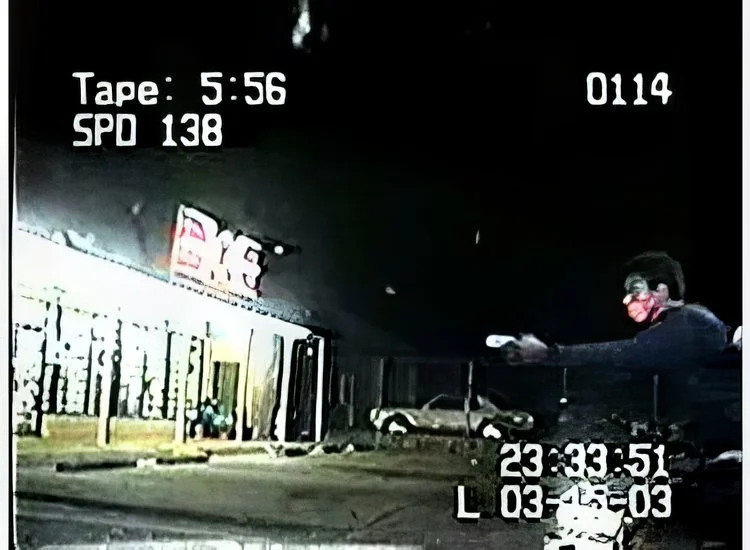
The suspect is holding his very shiny cell phone in a two-handed, pointing grip identical to a combat shooting grip.
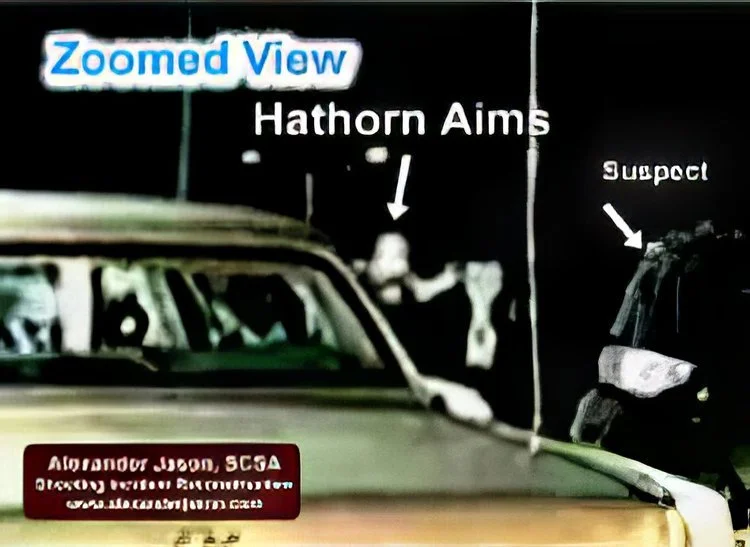
He is pointing (aiming) at Officer Hathorn who has just driven up on the left, out of view
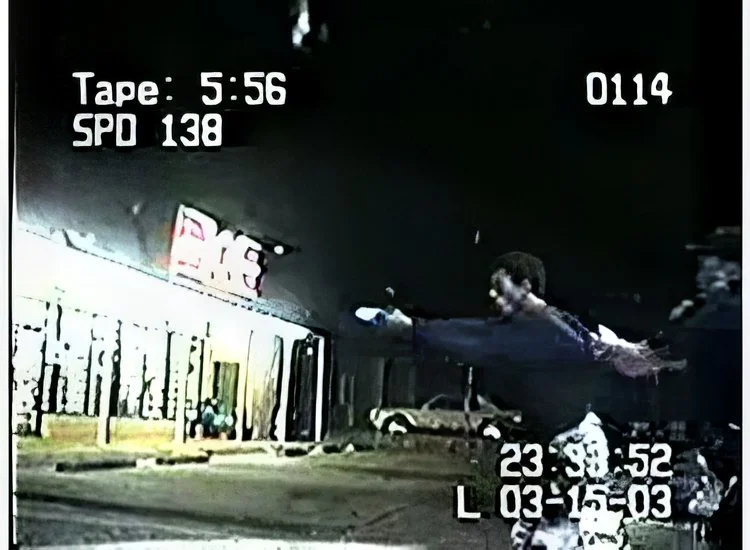
The suspect is still pointing the cell phone as a gun while a police officer (Armstrong) tries to grab him from behind.
Imagine what the other (off camera) officer (Hathorn) is seeing now.
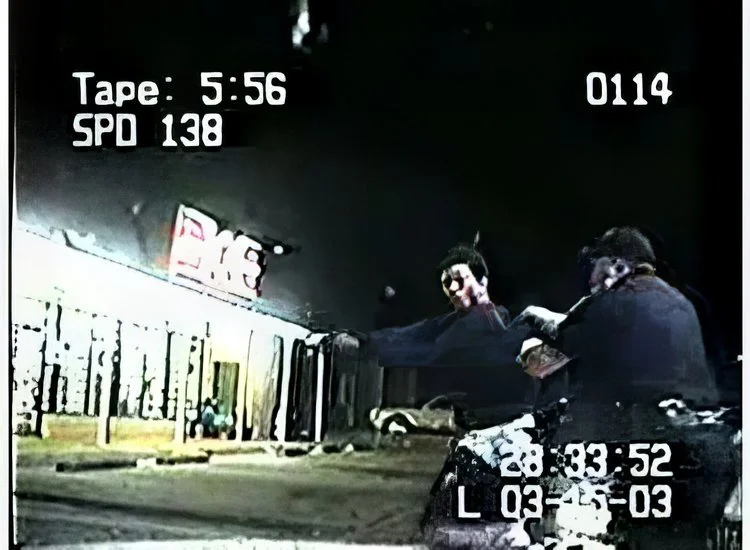
Suspect turns towards Officer Armstrong who is holding his pistol at the suspect's face.
Wouldn't this be sufficient to warn the suspect that he may get shot if he continues his actions?
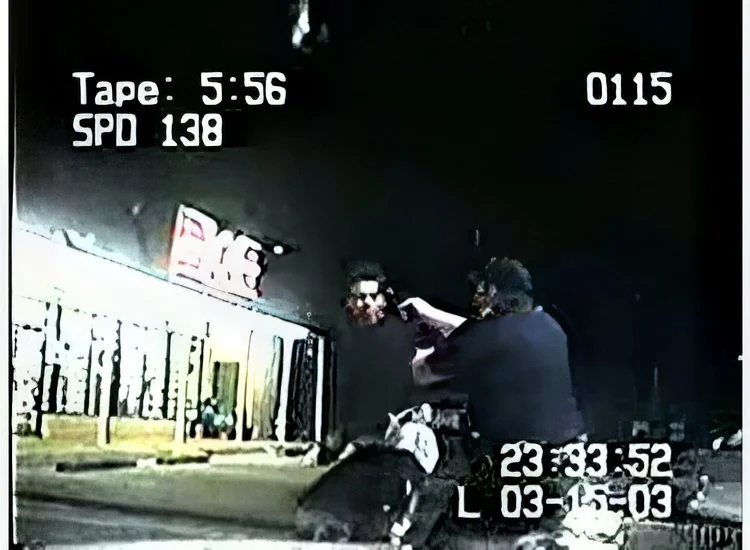
Suspect is fighting with Officer Armstrong who is clearly pointing his pistol at the suspect's face.
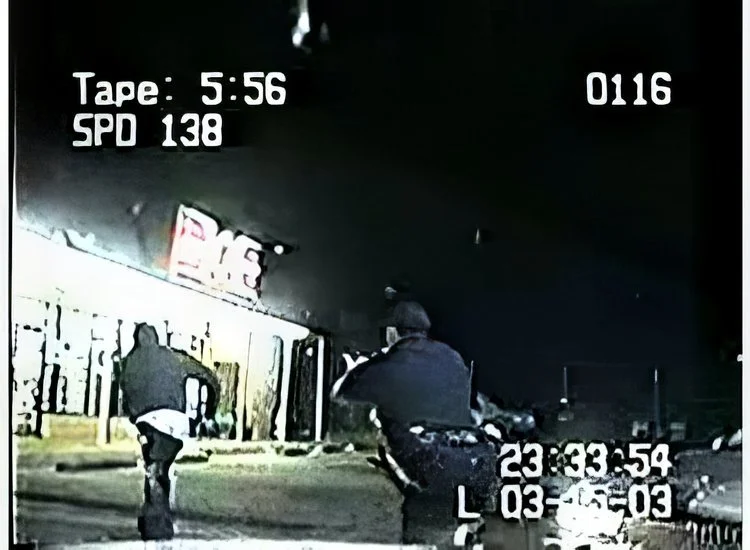
Suspect breaks away from Armstrong.
He has now been shot at twice and (apparently missed) by Officer Hathorn on the left (out of view).
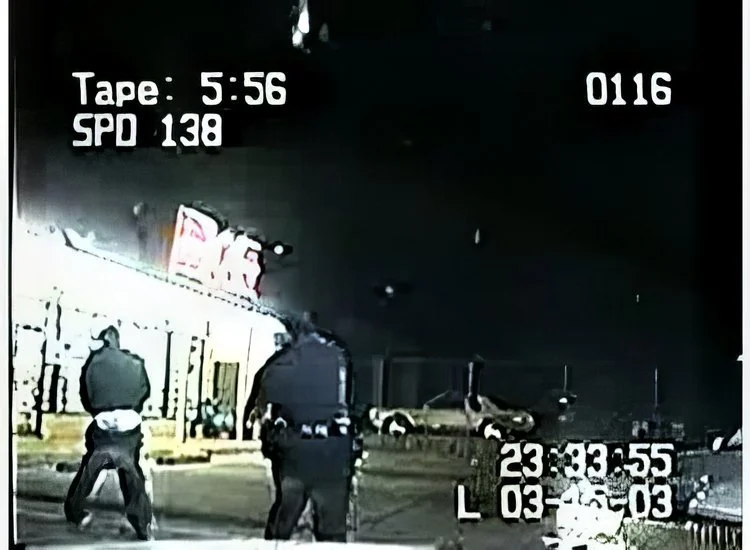
Suspect has his hands together in front as if he is gripping a pistol.
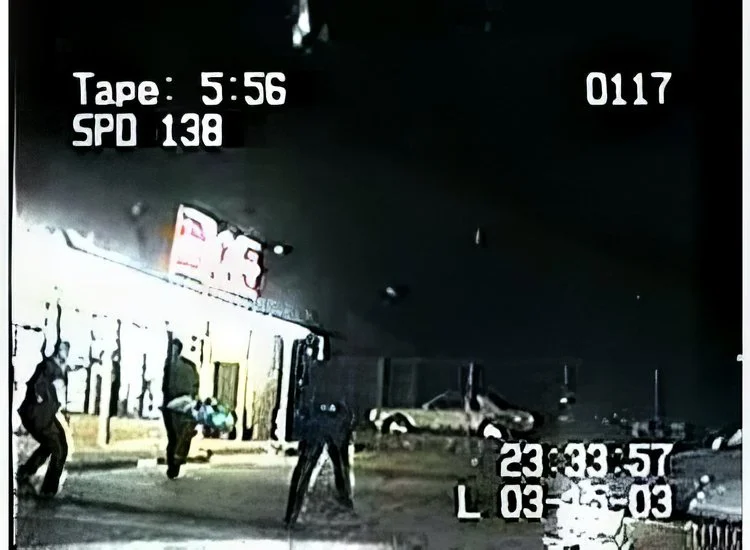
The two officers are now chasing the suspect.
He could have stopped and raised his hands at any time.
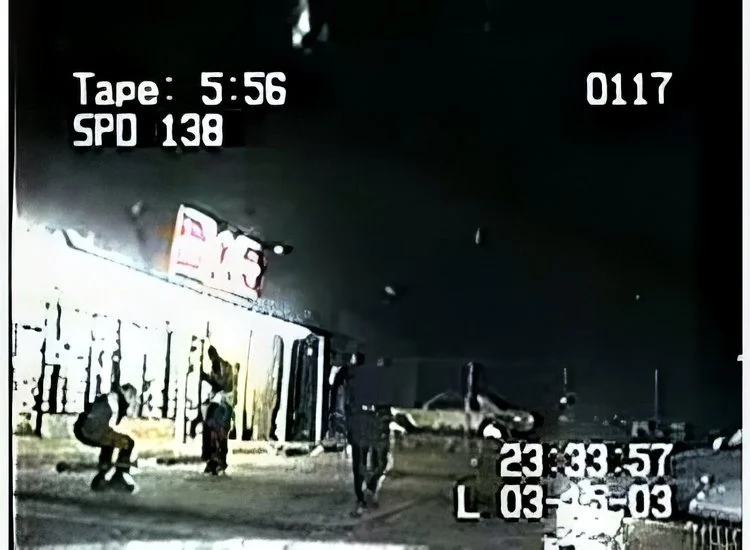
The suspect has partially turned around.
The officer on the left (Hathorn) is ducking - a clear indication that he believed the suspect was armed and about to shoot.
If he knew the suspect was not armed, why would he duck defensively?
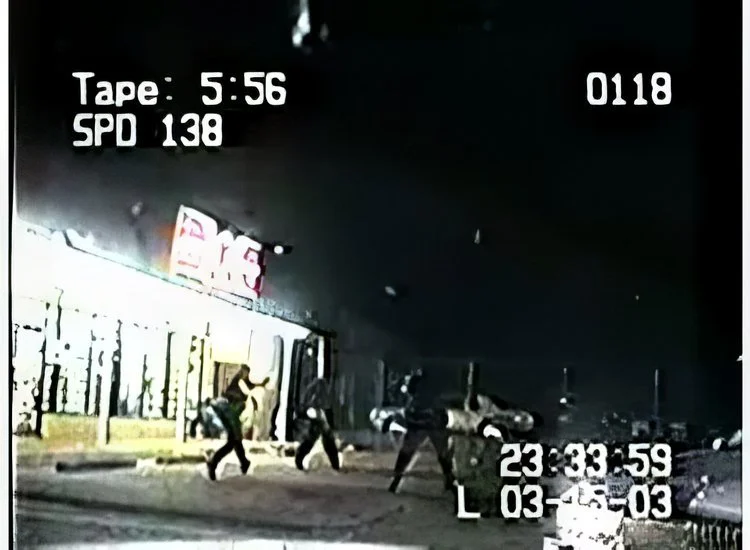
More shots have been fired.
Suspect continues to evade officers; his hands are still not up.
Finding
(Based on the limited data available to me)
YES — Officers could reasonably have believed the suspect was armed with a firearm.
A. Split-Second Visual Assessment
When Officer Hathorn stopped his vehicle, he saw the suspect in a combat shooting stance holding a shiny metallic object—apparently aiming a firearm at him. When viewed from the front in a two-handed grip, it is very difficult to clearly see whether someone is holding a gun or a shiny cell phone.
B. Functional Cell Phone Guns Exist
Law enforcement personnel are aware that functional cell phone guns exist—professionally produced firearms built into cell phone housings that look exactly like genuine cell phones. It was reasonable for officers to consider this possibility.
C. Officer Behavior Confirms Threat Perception
Officer Hathorn's actions—ducking defensively each time the suspect turned toward him—are consistent with a genuine belief he was in imminent danger of being shot. This is not the behavior of someone who knows an opponent is unarmed.
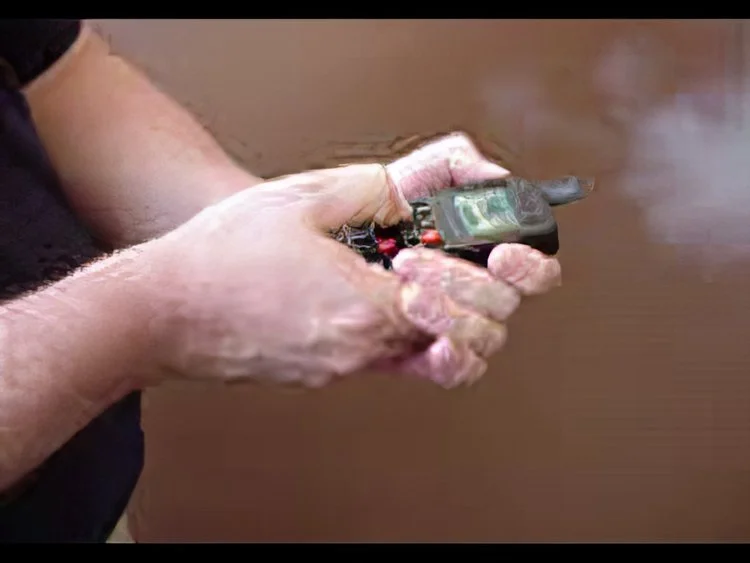
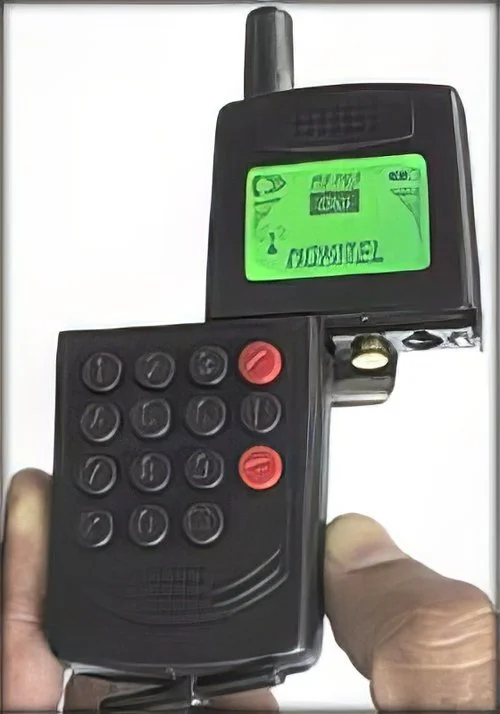
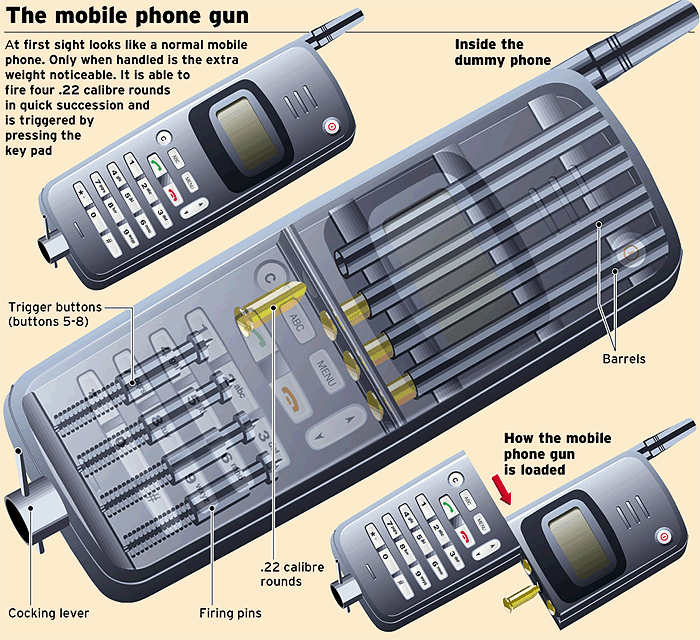
Enlarged View of "Unit 170-Ramsey" Video
In the short period of time the officers had to make a judgment about the situation, the very shiny,
metallic appearing cell phone did resemble a firearm and it was prudent and reasonable for the officers to assume that it was indeed a firearm.
This is particularly true in view of the the manner in which the decedent "aimed" or pointed the cell phone.
See the incident progression below:
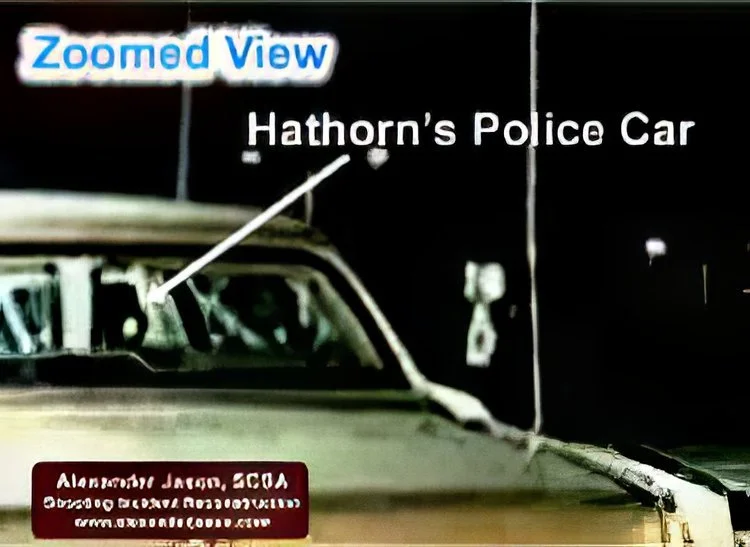
The rear of the suspect's gold Cadillac is seen. Hathorn's vehicle appears from the left.
Hawthorn has exited his vehicle and is standing at the open door. Out of view on the left, the suspect points/aims his cell phone.
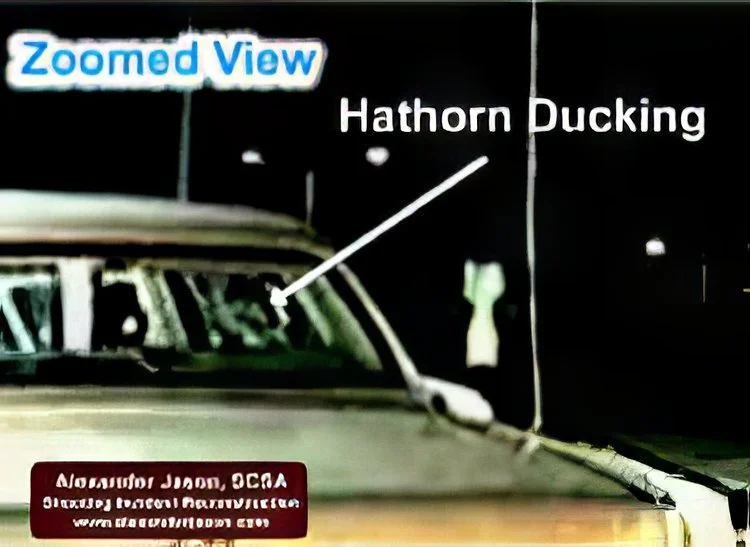
Hathorn reacts to the threat, ducks down behind his vehicle.
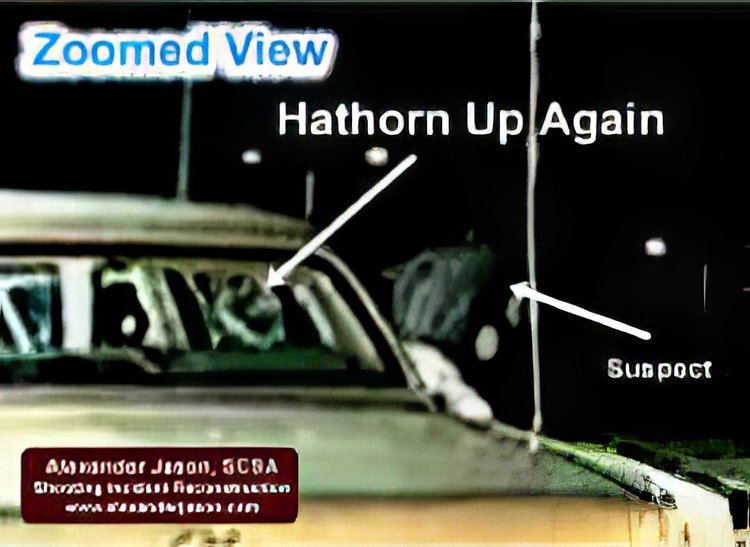
The suspect has broken away from the other officer. Hathorn rises up.
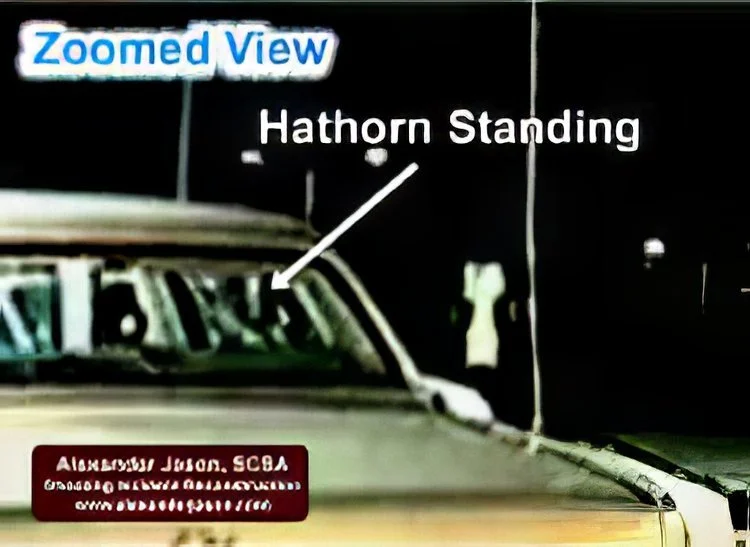
Hathorn is standing again, aiming and firing as the suspect moves away.
How This Situation Could Have Been Prevented
Suspect stops for the first police car
Suspect stops at any time during the chase
Suspect stays in stopped car until ordered out
Suspect exits car with nothing in his hands
Suspect does not point the cell phone like a gun
Suspect does not resist officer attempting to stop him
Suspect stops and raises hands when officer's gun is in his face
Suspect stops and raises hands when first shots are fired
Suspect does not turn around pointing the cell phone while being chased
Suspect drops to the ground at any time